The average data breach now costs $4.88 million, and customer personal information, which includes payment credentials, remains the single most frequently compromised type of record, according to IBM’s Cost of a Data Breach Report. That number is worth sitting with, because it reframes how you should think about cardholder data. Payment data is not just a compliance liability to hand off and forget. It is one of the most valuable and most targeted assets your business touches.
Yet for years, merchants and issuers have outsourced that sensitive cardholder data to processors almost by default. It was the path of least resistance for PCI compliance. Sign the contract, offload the risk, move on. But that default came with a quiet cost. It meant handing over the thing that actually holds long-term value: the data relationship with your own customer.
Here is why that trade is worth rethinking, and what changes when you use a neutral, independent vault.
Independent vaulting decouples data ownership from processor lock-in.
When you tokenize in an independent vault, rather than a processor’s, you have access to the credential information and the ability to route wherever you choose. Switching processors, adding a backup rail, or negotiating better economics no longer means a costly, risky re-tokenization migration.
Put simply, your data infrastructure stops being held hostage to your processing contract. The leverage shifts back to you.
It reduces the PCI scope more durably.
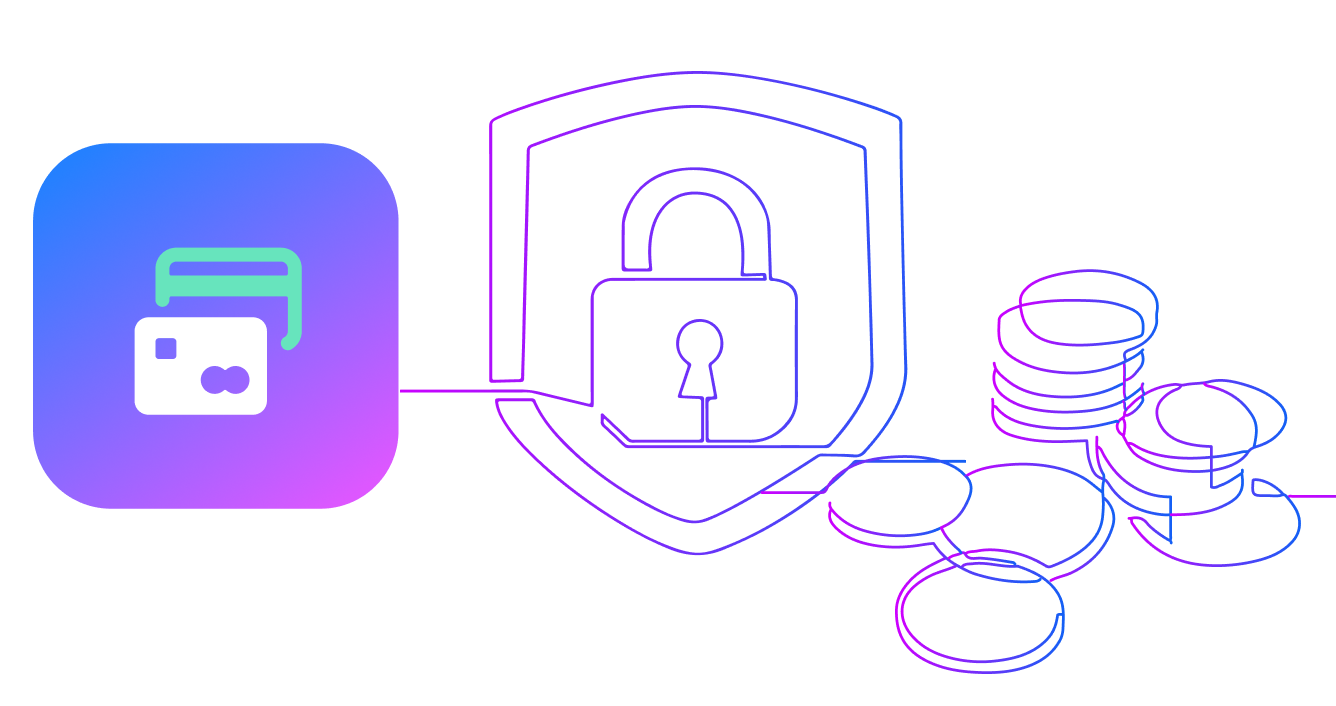
Moving cardholder data “in the clear” between your systems and a processor sounds counterintuitive, but with a properly secured, PCI-compliant vault as the intermediary, you’re substituting real PAN exposure across your environment with tokens everywhere except the vault itself.
That shrinks your cardholder data environment (CDE) footprint instead of just checking SAQ boxes. And because the reduction is structural rather than procedural, it holds up far better under audit as your stack evolves.
Owning the vault means owning the token strategy.
This is the part that tends to get underweighted, so it is worth slowing down on.
An independent vault can provision and manage both processor tokens and network tokens (e.g., Visa, Mastercard) side by side, and translate between them as needed. That flexibility is what makes real orchestration possible. It matters for account updater services, for cryptogram-based authentication (CAVV/TAVV), and for multi-processor routing.
None of that can be orchestrated cleanly if your token vault lives inside someone else’s black box.
It’s a hedge against concentration risk.
The ground under payments is consolidating fast. Capital One is absorbing Discover, folding a card issuer and a network into one. Global Payments and Worldpay, two of the largest merchant processors, are combining. Across adjacent commerce, the same gravity is pulling platforms together.
Fewer independent processors and networks means less negotiating leverage, fewer fallback rails, and more pricing power concentrated in whoever survives the merger wave. Competition is disappearing, and when it does, the cost of being locked into any single provider only goes up.
The real value of owning your credential data is preserving portability and reducing dependency on any single provider. Whether you’re a merchant weighing processor diversification or an issuer managing network relationships, your credential data is the one asset you cannot afford to be single-threaded on. An independent vault keeps your token and network relationships portable, no matter who buys whom. And that portability is becoming less of a nice-to-have and more of a requirement as agentic commerce and multi-rail strategies move from experiment to table stakes.
It’s what makes a real loyalty strategy possible.
Loyalty is not just a points program bolted onto a checkout flow. It depends on being able to follow a customer’s transaction activity across touchpoints, channels, and even processor changes over time.
If the underlying PAN and token relationships sit inside a processor’s proprietary vault, that continuity breaks the moment you switch providers or add a new rail. Everything you learned about that customer resets.
Owning your vault means you own the durable identifier that ties a customer’s transactions together. Loyalty, personalization, and lifetime-value analysis no longer start from zero every time your processing stack changes.
That is the difference between loyalty as a feature and loyalty as an asset.


The bottom line
Data ownership is not just a defensive PCI play. It is what gives merchants and issuers real optionality: over processors, over networks, over loyalty economics, and over how they show up in the next generation of commerce.
The businesses that own their vault own their future. The ones that do not are building on someone else’s roadmap.
Own Your Data, Not Your Processor’s Roadmap.
VGS gives merchants and issuers an independent, PCI-compliant vault, so you control your PANs, tokens, and routing. Our team of experts can walk you through what independent vaulting looks like for your business.
Learn more