Recurring card failures seem to be a recurring theme in payments. 5 to 18% of recurring card payments fail per month. According to a Forrester study, involuntary churn, or the loss of customers who didn’t choose to leave accounts, accounted for a substantial 34% of the overall churn rate. Those are large shares of failures trace back to one fixable problem: the stored card details no longer match what the issuing bank has on file. A account updater, also known as card account updater, solves this by refreshing stored payment credentials before they are declined payments.
Key takeaways
- Account updater (AU), also called a card account updater (CAU), automatically refreshes stored card information, including the card number, expiration date, and account status, so that recurring and card-on-file payments continue to succeed without customer intervention.
- Major card networks (Visa, Mastercard, Discover, American Express) each operate their own account updater programs, and merchants access them through their vaults, acquirers, processors, or payment orchestration platforms.
- Core benefits include fewer payment failures, lower involuntary churn, better customer experience, and improved operational efficiency for finance and support teams.
- Modern AU service models include continuous (batch) and real-time account updater options; combining both produces the best coverage.
- Pairing AU with network tokenization and smart retries delivers the strongest payment performance and revenue retention.
What is an account updater (AU)?
An account updater is a service, also known as a card account updater (CAU), that keeps stored card details up to date when cards are reissued, replaced, or closed. AUs, also called CAUs, automatically update outdated card information without customer involvement, so recurring billing and credential-on-file payments continue without interruption.
- Card-on-file (COF) refers to any setup in which a merchant stores card data with the cardholder’s authorization for future transactions, ranging from subscription services to one-click checkout.
- Recurring billing refers to regularly scheduled charges (e.g., monthly SaaS, weekly deliveries, annual memberships). AU keeps these charges flowing when a customer’s card expires or gets replaced.
- Involuntary churn describes customers lost because their payment method failed, not because they chose to cancel. Roughly 40% of cardholders replace their cards each year due to expiry, loss, fraud, or upgrades, creating a constant risk of stale credentials.
- Account updater services focus on updating the Primary Account Number (PAN), expiration date, and account status. They do not fix declines caused by insufficient funds, suspected fraud, or blocked transactions.
- The process involves sending requests to card networks for updates. Card networks securely transmit updated card details to payment processors, who deliver results to merchants.
How account updater works behind the scenes
AU creates a secure data flow between issuers, card networks, acquirers, and merchants. The lifecycle of a card update follows a predictable path:
- The issuing bank triggers a change. When a card is reissued, expires, or is reported lost, the issuing bank submits the update to the relevant card network’s updater database, typically within two business days.
- The card network processes the change. Visa Account Updater (VAU) or Mastercard Automatic Billing Updater (ABU) stores the old-to-new mapping. When PANs change multiple times, networks link the chain so any prior account number resolves to the most current credentials.
- Merchant or acquirer requests updates. This happens either through batch-file submissions (continuous model) or through single-card queries (real-time model). The merchant submits stored card information, and the network responds with new details or status flags.
- Outcomes returned. An account updater AU can return a new card number and new expiration date, confirmation that existing card data is still valid, notification that the account is closed, advice to contact the cardholder, or “no update available.”
- Merchant updates records. Updated card information replaces stale entries. Future transactions use the refreshed credentials.
Automated updates from AUs lower the likelihood of declined transactions on the next billing date. Cardholder data is transmitted securely through encrypted channels throughout this process, and merchants generally see only processed update results from their provider, not raw network messages.
Account updater programs compared
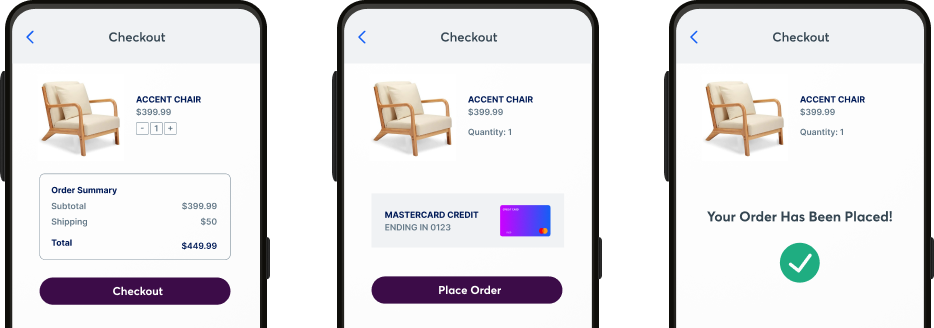
Major credit card networks each operate their own account updater programs, and each network use different methodologies for updating card information.
- Visa Account Updater (VAU): Supports batch file, API, Real-Time VAU, and a Push Subscribe Service that sends automatic updates to subscribed acquirers when issuers report changes. High participation in North America, the UK, Ireland, Italy, and Greece. Only PAN, expiration date, closures, and advisories are covered; no name or address changes.
- Mastercard Automatic Billing Updater (ABU): Mastercard rules require many issuers to submit account changes. ABU supports both push and pull models and covers reissuance, changes to expiration dates, and brand/BIN conversions. Cardholders can opt out.
- Discover and American Express: Both operate updater offerings (American Express Enhanced Authorization and updater programs for European and U.S. markets). Coverage depends on issuer and region, and detailed information is less uniformly published.
- Push vs. Pull: In a pull model, the merchant or acquirer submits PANs to check for changes. In a push model, the network proactively sends card updates to subscribed participants. VAU supports both; ABU similarly supports push and subscription endpoints.
- Coverage is not 100%. Participation depends on issuing banks and card products. Some issuers opt out or limit which accounts are included, particularly for prepaid cards, certain commercial cards, or specialized card brands.
Merchants rarely integrate directly with each card network. Instead, they access these programs through acquirers, payment service providers, or a payment orchestration platform that manages multiple updater connections.
Account updater vs. network tokenization
Account Updater and Network Tokenization both address card lifecycle issues, but they work differently and solve different problems.
- The account updater keeps the underlying card information (PAN and expiry date) up to date in the merchant’s systems. This preserves routing flexibility, supports multi-processor setups, and ensures stored card details stay valid for retries across acquirers.
- Network tokenization replaces the PAN with a token that stays valid even if the underlying card changes. The card network automatically maps the token to the new PAN. Visa claims authorization rate lifts of roughly 4.6% on some off-session transactions when using tokens.
- When AU is the right tool: Merchants needing PAN access for routing, card attributes, or payment processor flexibility; legacy flows; and situations where not all card products or acquirers support tokens.
- When tokens excel: Digital wallets, high-risk fraud environments, markets with strong token adoption, and scenarios where security and authorization uplift are priorities.
- Best practice: Use network tokens where possible and add an account updater to maintain card data for non-tokenized cards, legacy flows, and edge cases. VGS’s card management approach combines both for maximum coverage.
Key business benefits: from fewer payment failures to better CX
AU is a revenue-protection tool, particularly for businesses with stored credentials: subscription services, SaaS, marketplaces, e-commerce retailers with one-click checkout, utility companies that streamline billing through auto-pay, and membership-based services that need to avoid service disruptions.
- Fewer failed payments. AUs reduce involuntary churn by preventing 50% of subscription failures tied to stale card data. Automated card updates keep payment information up to date, ensuring renewals succeed without customer friction.
- Revenue recovery. Using AUs can recover revenue lost from payment issues for 37% of subscribers who would otherwise experience failed renewals. When merchants first enable account updater, 20-35% of eligible cards receive updates in the first month.
- Customer experience. Account Updater improves customer experience by ensuring seamless billing. Customers avoid “update your payment method” prompts and service disruptions.
- Operational efficiency. Benefits of account updaters include reduced operational costs and improved revenue recovery. Finance teams handle fewer failed transactions, manual outreach campaigns, and inbound support tickets.
- Security. AUs enhance security by reducing manual handling of sensitive card data. No phone calls or emails collecting new card details means lower exposure of card information.
Subscription-based businesses should use AUs to maintain revenue streams. SaaS companies benefit from AUs for monthly billing cycles. E-commerce retailers that offer one-click checkout should implement AUs to keep stored payment credentials up to date.
Common implementation models: continuous vs. real-time account updater
Most providers offer continuous (batch) and real-time account updater options. Combining them often produces the best payment outcomes.
- Continuous account updater runs scheduled checks (daily, weekly, or monthly) against large sets of vaulted cards, retrieving card updates ahead of billing cycles. Ideal for subscription and recurring payments portfolios. Best practice: submit batch inquiries 3-4 days before the billing date for monthly charges; at a minimum, once every 180 days for infrequent billing.
- Real-time account updater queries a single card on demand, at the moment of transaction, or right before a high-value charge. Minimizes the window during which card information can become stale. SaaS companies benefit from continuous updates for predictable monthly cycles, while real-time AU suits irregular renewals or when a payment has just failed due to suspected stale credentials.
- Combined pattern. Run continuous AU several days before billing cycles, then fall back to real-time AU when a transaction declines with codes indicating expired cards or changed account numbers. This two-layer approach catches updates that arrived after the last batch run.

Operational considerations, costs, and limitations
AU is not a magic switch. Merchants should understand coverage, cost, and compliance before rolling it out.
- Coverage constraints. Not all card issuers participate in AU programs. Prepaid and some debit cards may be excluded. Closed accounts cannot be revived by card updates.
- Opt-out rights. Cardholders can opt out of AU programs, which can create potential gaps in coverage. Some issuers also exclude specific account types.
- Pricing. Typical models include per-inquiry fees, per-update fees (charged only when new details are returned), and minimum monthly commitments. Update fees need to be weighed against revenue recovered from saved renewals.
- What AU does not fix. Declined payments caused by insufficient funds, merchant category restrictions, fraud blocks, or strong customer authentication failures require separate tools: smart retries, risk scoring, and authentication methods.
- Compliance. AUs operate in accordance with PCI DSS compliance standards. Using AUs reduces the risk of data breaches during updates and minimizes the PCI compliance scope by avoiding full PAN storage when combined with tokenization vaults. Handling sensitive payment data increases compliance risks if done without proper infrastructure. AUs require ongoing maintenance and updates to stay current with network rule changes.
Set realistic expectations by auditing historical decline reasons, estimating potential revenue recovery, and modeling expected AU fees against that recovery.
How to implement an account updater in your payment stack
Businesses can access AU through three main routes: direct card network API integration, acquirer or processor services, or payment orchestration and vault platforms.
- Vault route. Independent providers centralize AU across multiple processors, keeping card data in a processor-agnostic vault. This reduces vendor lock-in and supports routing flexibility. The Lloyds Banking Group migration of roughly 10 million cards from Mastercard to Visa illustrated how a lack of account updater coverage can cause mass, recurring charge failures during network brand flips.
- Direct network integration is a significant engineering commitment. Integrating AUs can take 6 to 12 months, requires separate enrollments and certifications with each card network, and is usually only practical for very large merchants.
- Acquirer/processor route. Many gateways and PSPs offer built-in AU service for stored credentials they manage. Enabling it may require only a contract addendum and configuration changes. Your payment processor handles connectivity to the card networks.
- Basic implementation plan. Audit existing stored cards and decline reasons. Enable AU with your chosen provider. Update the billing logic to handle refreshed card information and account-closed responses. Monitor decline rates, payment failures, and recovered revenue.
- Cross-team coordination. Involve payments, engineering, finance, and customer support. Define success metrics, edge-case handling, and communication strategies for the small percentage of customers who still need to manually re-enter their card details.
Improving customer experience and operational efficiency with AU
AU directly shapes customer experience and internal workflows. Account updater improves customer experience by eliminating manual updates for most card changes, reducing friction and customer drop-off.
For low-engagement subscriptions, any extra step (like an “update your payment details” email) can prompt cancellation. Automatic updates from AU remove that trigger. Combining AU with smart retries, dunning strategies, and clear in-app messaging helps reduce churn and the number of support tickets related to declined transactions.
Workflow improvements are concrete: finance and collections teams shift from manual list pulls and outreach to analyzing AU metrics, optimizing retry schedules, and improving overall billing performance. AUs help maintain continuity of payment relationships for merchants, and in marketplace or platform models, reliable payment infrastructure means timely payouts to partners and suppliers. Keeping card data up to date across your payment stack is a game-changer for reducing failed payments and building a more predictable subscription business.
FAQs
-
Does a card account updater work for every customer card on file?
Coverage depends on card network participation, issuing banks, and card types. Many consumer credit cards from major card brands like Visa and Mastercard are covered, but some debit, prepaid, and commercial cards may not be. Even on participating networks, issuers choose which cards they enroll, and some cardholders may opt out. Review updater coverage reports from your provider and analyze which portions of your portfolio (by BIN, region, or card brand) benefit most.
-
Will the account updater fix declines from insufficient funds or suspected fraud?
No. AU only addresses declines related to outdated or changed card information, such as a new card number, a new expiration date, or account closure. It cannot resolve false declines caused by balance issues, fraud rules, or account restrictions. Combine AU with network tokens, adaptive retry logic, risk scoring, and authentication methods to cover the full spectrum of reasons for decline. Monitor decline codes over time to distinguish “stale credential” issues from categories that require different remediation.
-
How often should businesses run continuous account updater checks?
Optimal frequency depends on billing patterns. Monthly subscription services should sync once or twice per month, ideally several days before major billing cycles, to ensure card details are up to date when charges are processed. Businesses with daily recurring charges benefit from more frequent batch updates. Some providers allow batch schedules to be configured; others have fixed cycles. Coordinate with your AU vendor to balance data freshness against processing costs.
-
Do customers need to consent or be notified when their card is updated via CAU/AU?
Card account updater and account updater programs operate within the card network and issuer rules. Consent is typically obtained as part of cardholder agreements and merchant terms covering recurring payments and credential-on-file storage. Merchants should ensure their terms of service and privacy policies describe how stored card information and account changes are handled. Consult legal and compliance teams to align AU usage with regional regulations, especially in markets with strict consumer notification obligations.
-
What metrics should we track to measure the impact of implementing a card account updater?
Track pre- and post-implementation authorization rates for recurring and card-on-file transactions, focusing on declines with codes related to expired or invalid cards. Monitor involuntary churn, dunning volumes, and support tickets related to payment-method issues. Calculate incremental recovered revenue (payments that would have failed without AU) against updater fees to quantify ROI and refine your configuration over time.


The bottom line: keep stored cards current, keep revenue flowing
Cardholders replace their cards, and stale credentials are among the most predictable causes of failed payments. The good news is that they’re also among the most fixable. An account updater refreshes card numbers, expiration dates, and account statuses behind the scenes, so recurring and card-on-file payments succeed without asking customers to lift a finger.
AU isn’t a cure-all. It won’t resolve declines caused by insufficient funds, fraud blocks, or authentication failures, and coverage varies by issuer, region, and card type. But when you combine continuous and real-time updates, pair them with network tokenization and smart retries, and track the right metrics, you close one of the biggest gaps in your payment stack. The result is fewer failed payments, lower involuntary churn, leaner support and collections workloads, and a smoother experience for the customers you’ve worked hard to keep.
The businesses that treat card lifecycle management as a core part of their payment strategy, rather than an afterthought, are the ones that turn involuntary churn into retained revenue.
Stop losing customers to outdated card data
VGS helps you keep stored payment credentials up to date across every processor you work with. Our card management approach combines account updater, network tokenization, and card attributes in a single, processor-agnostic vault, so you get maximum coverage without the 6 to 12 months of direct network integrations or the risk of vendor lock-in.
Talk to VGS